
corecode:~$cd ./solutions/enterprise-ai
Internal document AI chatbots — AI for work where errors are not an option
We bring AI into work such as finance, law, and compliance, where a single error is hard to undo. Answers include supporting clauses, and the system declines to answer when there is no supporting evidence.
If this sounds familiar
- You have tried ChatGPT, but questions about internal policies and terms produce plausible wrong answers
- Network isolation prevents you from using cloud AI, leaving AI adoption at 0
- Every data question requires asking IT for SQL, and answers take days
What we build
AI chatbots for internal documents and terms (GraphRAG)
We index documents with both a knowledge graph and vectors, and attach source clauses to every answer. We limit the share of queries generated directly by the LLM to 5% or less to reduce hallucinations and costs.
On-premises · Isolated-network AI
Local LLMs and local speech recognition run with 0 external API calls. This configuration was validated against a golden set with 11/11 passing, using 877 chunks from actual terms and legislation.
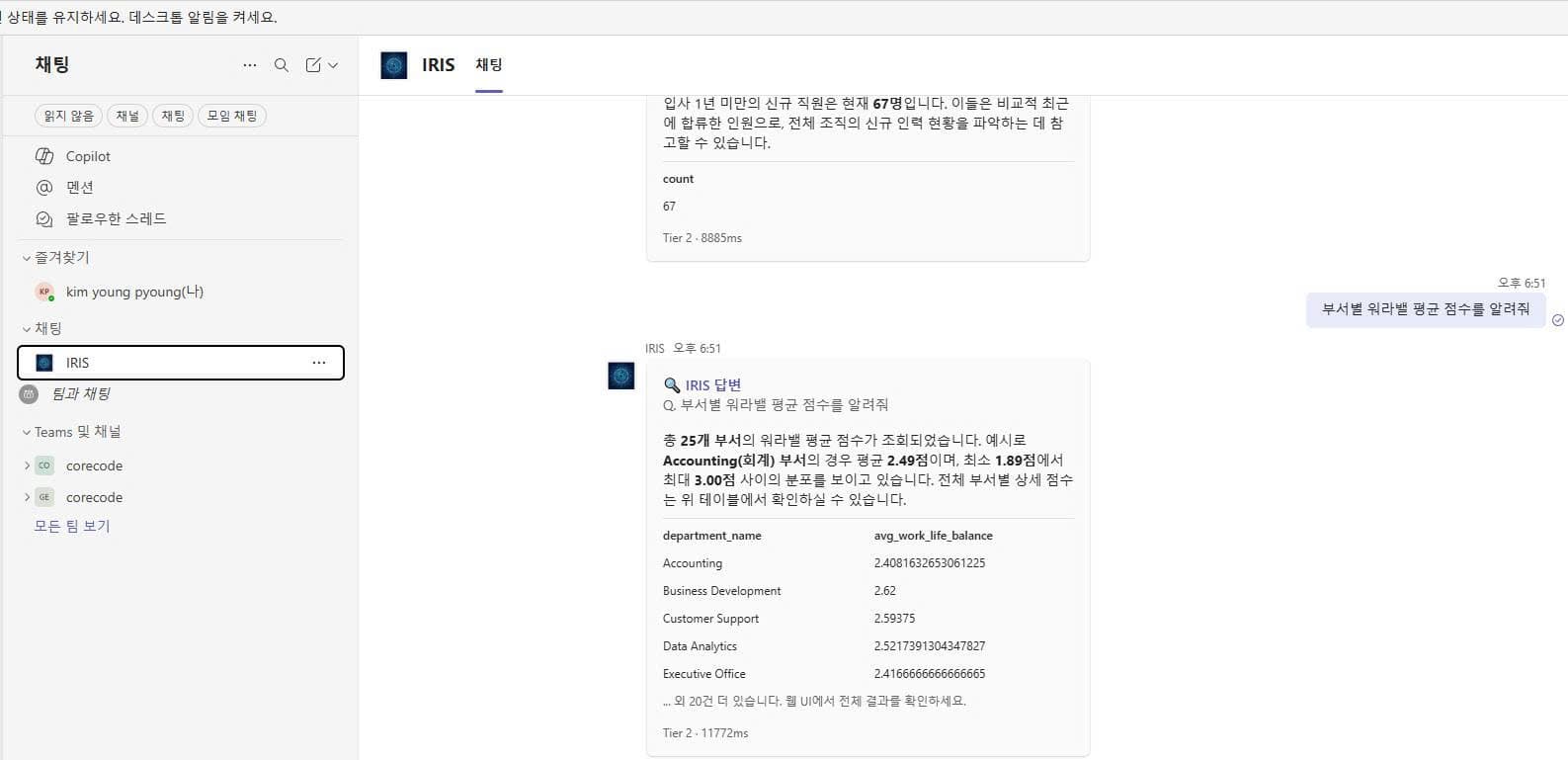
Natural-language data queries (NL→SQL)
An ontology separates business terms from the DB schema, allowing HR teams and executives to ask data questions in Korean. Actual data is not sent to the LLM.
Validation loops and audit records
We measure accuracy with a golden set and log even declined questions with the reasons. The goal is operations that stand up to audits, rather than a demo that works well.
What we have built
All figures are measured. Each case study documents the basis for its sources.
How we work
- 1
Assessment (1 week)
We review documents, data, and the network environment to choose the right approach (GraphRAG · NL→SQL · on-premises). Together, we create 10–20 golden-set questions.
- 2
Design (1 week)
We design the ontology, citation rules, refusal rules, and audit logs first. We choose the model last.
- 3
Build (2–4 weeks)
We build the pilot with actual documents and measure accuracy against the golden set. We report items that did not pass, along with the figures.
- 4
Operations
We expand the ontology using question logs and measure again with the same golden set when replacing the model.
Scope and timeline
We start with a 4-week pilot. Pricing depends on the document count, network environment, and integration scope, so we define the scope first in a 30-minute consultation.
Frequently asked questions
How is this different from general chatbots such as ChatGPT?
Answers include supporting documents and clauses, and the system declines to answer without evidence. Its GraphRAG architecture combines a knowledge graph with vector search, so it also answers questions that follow relationships between documents.
Does it work in isolated networks?
Yes. We have operated a configuration with local LLMs and local speech recognition using 0 external API calls. We validated a golden set with 11/11 passing, using 877 chunks from actual terms and legislation.
How do you prevent hallucinations (plausible wrong answers)?
There are three layers. ① Limit queries generated directly by the LLM to 5% or less ② Check every answer for supporting evidence with a grounding score ③ Track accuracy numerically against a golden set.
Does our data leave our environment?
Not in an on-premises configuration. Even when using a cloud LLM, we send only ontology concepts and aggregate values, rather than actual data, and mask personal information.
How long does it take?
A 4-week pilot is the baseline. Assessment takes 1 week, design 1 week, and the build 2–4 weeks, depending on the document count and integration scope.
See how it works with your documents in 30 minutes
With a few of your documents and 10 questions, we can tell you which approach fits during the consultation.